What is Evolution?
Evolution is change in the genetic material of a population of organisms from one generation to the next. Although the changes produced in a single generation are normally small, the accumulation of these differences over time can cause great changes in a population, which can result in the creation of new species. Similarities among species suggest that all known species came from a common ancestor. Evolution also helps to explain which organisms evolved from other organisms. Darwins Theory of Evolution helps to further explain the definition. One of the theory's main points involving evolution states that, "Species alive today are descended with modification from ancestral species that lived in the distant past. This process, by which diverse soecies evolved from common ancestors, unites all organisms on Earth into a single tree of life."
Evidence of Evolution:
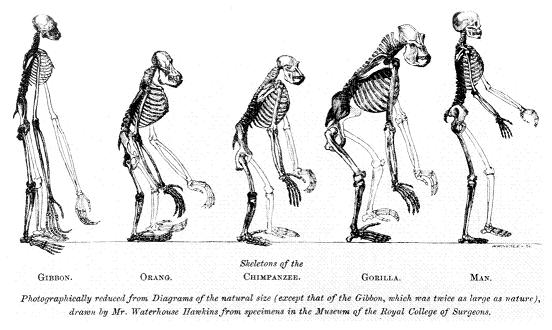
Evidence of evolution is presented in several ways. Some of these include; there is evidence found in fossils, the geographic distribution of living species, homologous structures, of living organisms, and similarity ties in early development, also known as embryology. With the facts produced from these pieces of evidence, it is easy to believe the clear clues of evolution.
The Fossil Record:
By comparing fossils from older rock layers with fossils from younger rock layers, scientists are able to document the fact that life on earth has changed over an extremely long period of time. Researchers have even discovered several hundreds of transitional fossils that prove many intermediate stages in the evoltuion of modern species from organisms that are currently extinct. Although certain periods in the evolutionary timescale remain unfound, there is no denying the exsistanceof evolution.

The Geographic Distribution of Living Species:
When Darwin visited the Galapagos Islands he found a variety of birds that were similar yet distinctly different in certain ways that made them of a different specie. He also recalled that the birds were a little different from the ones he saw on the mainlands of South America. He soon came to the conclusion that all the different species of birds originated from a common mainland ancestor. Darwin also realized that his theory of descent with modification made sense of what was going on. The exsistance of similar but unrelated species was a mystery to Darwin but now he knew similar animals in different locations were the result of different lines of evolutionary descent.
Homologous Body Structures:
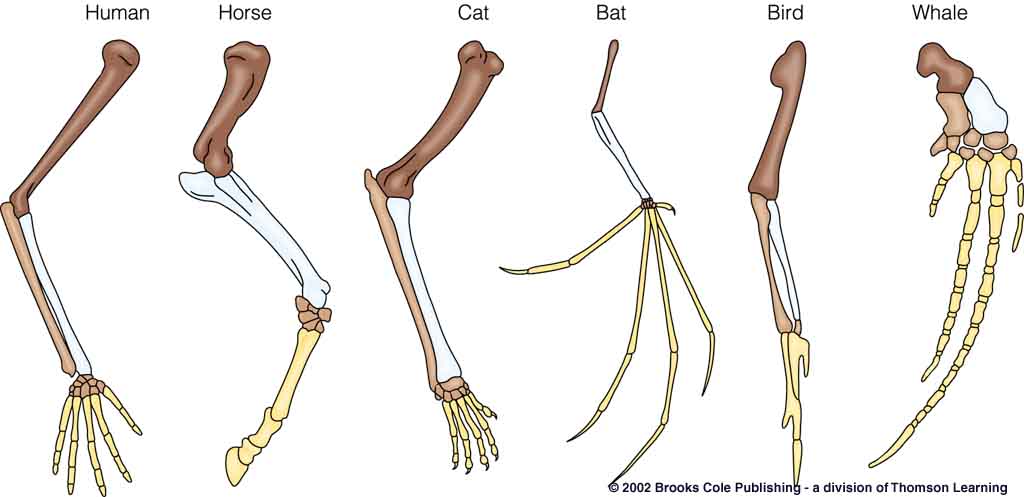
Evidence of evolution can be found in living things as well. Darwin noticed anatomical similarites amoung the body parts of animals with backbones. For example, the limbs of reptiles, birds, and mammals are different in form and function, but they are all constructed from the same basic bones. The limbs of each organism were constructed to fit the organims so it could survive in which ever enviroment it lives in. Structures that have different mature forms but develop from the same emryonic tissues are called homologous structures. Homologous structures provide evidence that leads scientists to believe all four-limbed vertabrates, with modifications, share common ancestors. Organs of many organisms show the same patterns as the bones do. They looked the same at one point in time at a young age, but develeoped to suit the needs of the organism. These organs are called vestigial organs, or organs that may reseamble miniature legs, tails, or other structures.
Similarities in Embryology:
If you look at the early development stages of a group of organisms, it is clear that there are obvious similarities which suggest that they could all share a common ancestor. An example of this is shown in the embryos of chickens, turtles, and rats. A biologist named Ernst Haeckel made drawings of embryos long ago that provides reason to assume common cells and tissues growing in similar ways resulted in the similar appearences of the embryo versions of certain organisms.

Evolutionary Classification:
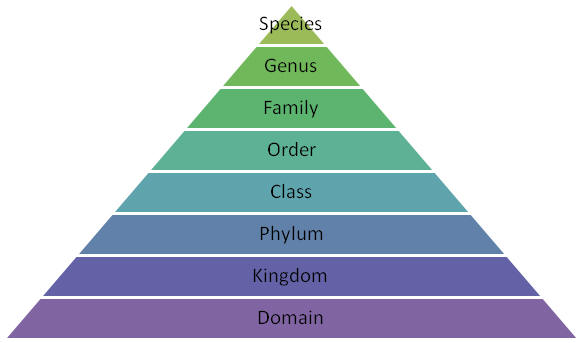
Grouping organisms together based on their evolutionary history is known as evolutionary classification. To help identify where each organism originated from, a system was developed to classify each organism. A man named Carolus Linnaeus made the process of naming species and classifying them into groups much easier. He created a system of classification that uses seven taxonomic categories. A taxonmoic category is a group or level of organization. Linnaeu's system of classification uses seven taxonomic categories that are species, genus, family, order, class, phylum, and kingdom. The domain is also a very important category as well. After grouping the organisms by evolutionary classification, similarites between the organisms become visible. For example, all of the organisms in the Animalia Kingdom have a nervous system, give live birth, breath oxygen, are warm blooded, and have systems that can be broken down. The farther you seperate each organism into a group, the more similarites between the organims become apparent.
Domain:
- There are three domains. The first one is Eukarya, which is composed of protists, fungi, plants, and animals.
- The second one is Bacteria which has to do with the kingdom Eubacteria.
- The third is the domain Archaea which corresponds witht he domain Archaeabacteria.
Kingdom:
- The kingdom is the largest and most inclusive of Linnaeus taxonomic categories.
- There are six kingdoms which are Animalia, Plantae, Eubacteria, Archaebacteria, Protista and Fungi.
Phylum:
- Phylums are made up of several different classes and it includes many different organisms that share important characteristics and developmental similarities.
- Some of these charcteristics include bodu plans and internal functions.
Class:
- Classes are a large category composed of similar orders. For example, Carnivora is placed in the class Mammalia which includes organisms with body hair, warm blood, and the ability to produce milk for their young.
Order:
- An order is a broad taxonomic category composed of similar families.
Family:
- A group of organisms ranking above a genus and below an order. The names of families end in -ae which is a plural ending in Latin.
Genus:
- A genus is a group of closely related species. The first part of an organism's scientific name is also the genus of the organism.
Specie:
- The specie helps to classify the organism by telling what kind of organism it is. For example, it distincts bears and fishes.